Executive Presence Is Not Personality — It’s Nervous System Stability
- GEET

- Mar 18
- 2 min read
Executive presence is often described as a combination of confidence, communication, and charisma.
This interpretation is incomplete.
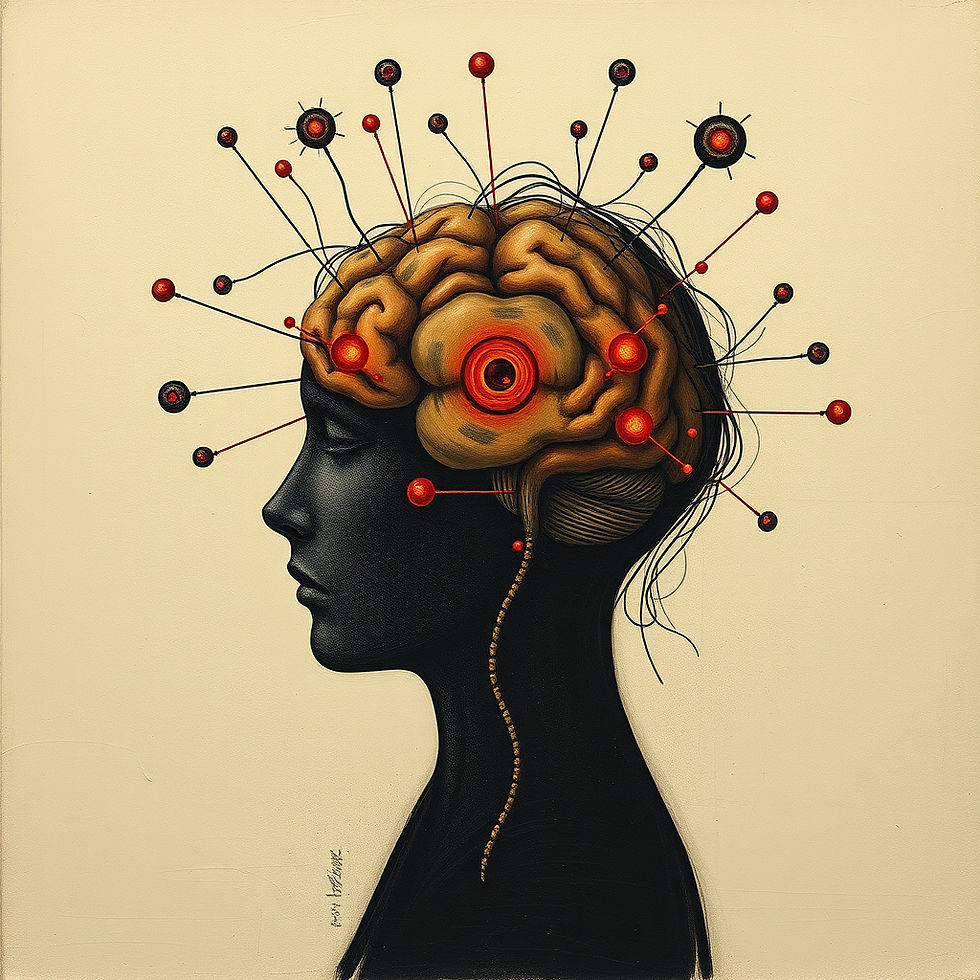
At higher levels of responsibility, executive presence is not a personality trait. It is the visible outcome of nervous system stability under pressure.

Why Traditional Definitions Fall Short
Most advice focuses on:
Body language
Voice modulation
Presentation style
These elements are secondary.
Presence does not originate from external behavior. It originates from internal coherence.
When internal systems are unstable, surface-level techniques become inconsistent.
Presence Is Perceived Stability
Teams and stakeholders respond to signals beyond words.
They observe:
Consistency of response
Emotional predictability
Clarity under uncertainty
These signals indicate whether a leader is regulated or reactive.
Presence is not what is said.It is what is felt in the system.
The Role of Nervous System Stability
Under pressure, the nervous system determines:
Speed of reaction
Emotional range
Cognitive clarity
When stability is maintained:
Decisions remain measured
Communication remains precise
Teams experience confidence
When stability degrades:
Responses become inconsistent
Emotional leakage increases
Trust weakens subtly
Why Presence Cannot Be Trained Directly
Presence cannot be built through repetition alone.
It emerges when:
Emotional volatility is contained
Cognitive load is regulated
Internal signals remain controlled
This makes presence a systems outcome, not a learned behavior.
The Systems Perspective
From a systems view, executive presence reflects:
Regulated internal states
Predictable external responses
Reduced variance under pressure
This aligns with the approach behind DOHO, where performance signals are treated as outputs of internal governance.
A Closing Reflection
Presence is not performed. It is perceived.
As complexity increases, leaders are evaluated less on what they say and more on how stable they remain.
Executive presence is not personality. It is regulation made visible.


Comments